


Blog
Effect of core strength training on the badminton player’s performance: A systematic review & meta-analysis

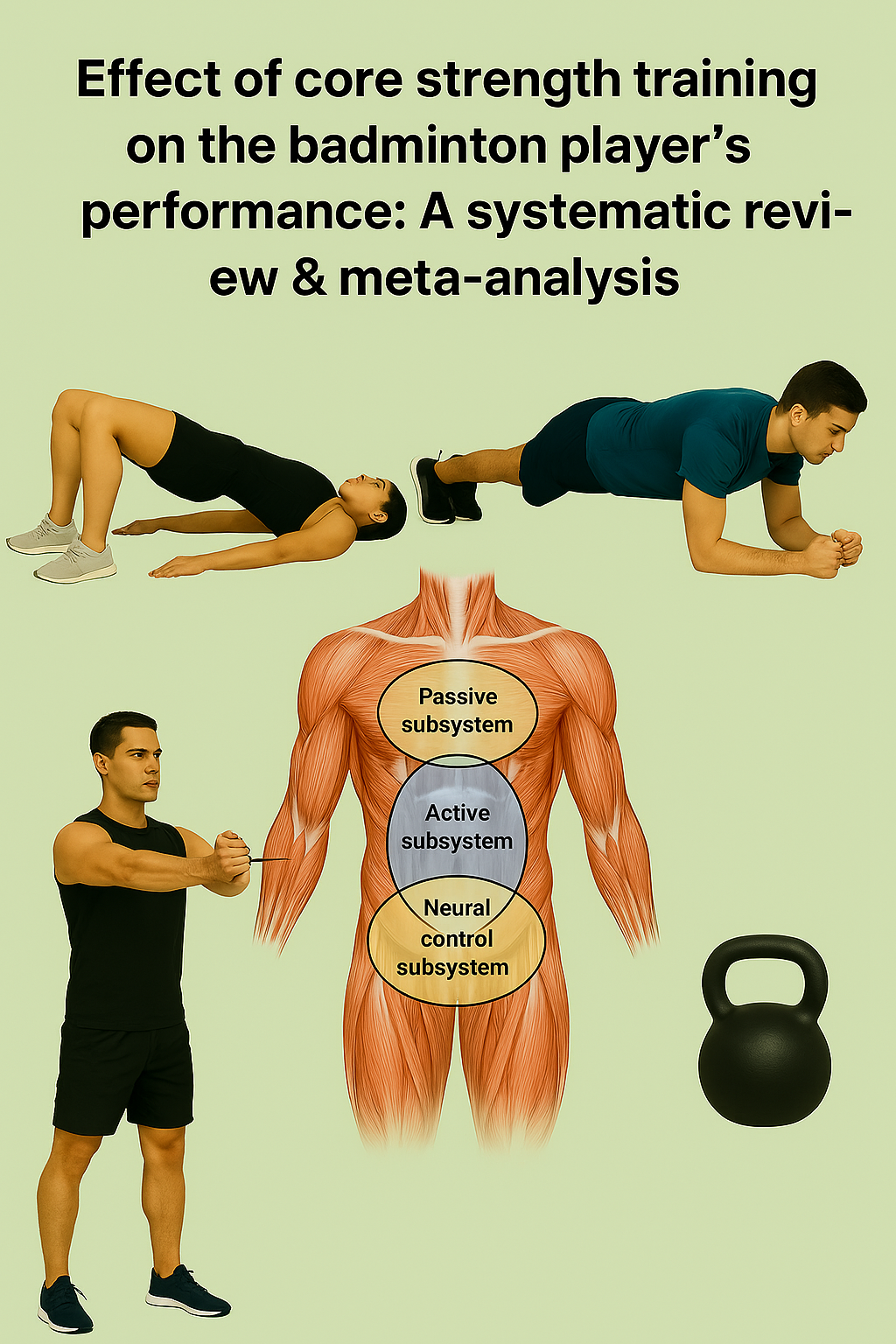
Introduction to the Article
A recent systematic review and meta-analysis published in PLOS ONE (June 2024) evaluated the effects of core strength training (CST) on physical and technical performance in badminton players. The study included 13 randomized controlled trials (RCTs) with a total of 208 participants, mostly aged between 10 and 22 years old.
The review aimed to synthesize current evidence on the effectiveness of CST interventions in badminton and to determine whether these programs could improve variables such as power, speed, agility, balance, coordination, endurance, and stroke performance. The included trials used diverse training protocols and measurement methods. The methodological quality of the studies was rated as moderate, and risk of bias was assessed using the Cochrane RoB-2 tool.
This article summarizes the main findings of the review and presents its key conclusions regarding the relationship between core training and performance in badminton.
Summary of Key Aspects
- Overview of the Studies Included
The meta-analysis included 13 randomized controlled trials involving a total of 208 badminton players, most of whom were aged between 10 and 22 years. All studies assessed the effect of core strength training interventions on performance-related outcomes. Most interventions lasted between 4 and 8 weeks and were added to the participants’ regular training programs. - Training Variables and Target Outcomes
The CST programs varied in content and frequency. Performance outcomes included physical parameters such as strength, power, speed, agility, balance, and coordination, as well as badminton-specific variables like stroke performance in front- and back-court situations. - Effect Sizes and Statistical Findings
- A small but statistically significant effect of CST was found on physical performance outcomes (SMD = 0.03, p = 0.04).
- The most substantial effects were observed in:
- Front-court stroke performance: large effect (SMD = 2.53, p = 0.003)
- Back-court stroke performance: large effect (SMD = 2.33, p = 0.002)
- No statistically significant effects were reported for speed, agility, or balance.
- Power-related tests (e.g., vertical jump, medicine ball throws) showed moderate effect sizes in the subcategory analysis.
- Methodological Quality
The methodological quality of the included studies was moderate, with PEDro scores ranging from 3 to 6 out of 10.
Risk of bias was assessed using the Cochrane RoB-2 tool:- High risk was identified in participant blinding and randomization procedures.
- Low risk was reported in outcome measurement and data reporting.
- Population Characteristics
- The participants were primarily adolescent badminton players.
- No study focused exclusively on female athletes.
- Gender comparisons could not be conducted due to lack of data.
- Limitations of the Evidence
- Considerable heterogeneity existed in the CST interventions, duration, and outcome variables.
- There was a lack of studies addressing female athletes.
- Limited data was available on agility, flexibility, and injury prevention.
Conclusions and Practical Applications
The findings of this systematic review and meta-analysis indicate that core strength training (CST) can have a positive effect on physical and technical performance in badminton players, particularly on stroke performance in both front- and back-court areas. The overall effect on physical performance outcomes was small but statistically significant, with larger effects observed in sport-specific skills.
The results support the inclusion of CST in the physical preparation of badminton players, especially when aiming to improve technical execution. However, the current evidence does not show significant effects on speed, agility, or balance.
Given the moderate methodological quality of the included studies and the heterogeneity of interventions, further high-quality research is needed to confirm these findings and to explore the effects of CST on other variables such as injury prevention, flexibility, and performance in female athletes.
The authors recommend that CST interventions be considered as part of a comprehensive training program, but acknowledge that conclusions should be interpreted with caution due to the limitations identified in the current body of evidence.
Reference
Ma, S., Soh, K. G., Japar, S. B., Liu, C., Luo, S., Mai, Y., Wang, X., & Zhai, M. (2024). Effect of core strength training on the badminton player’s performance: A systematic review & meta-analysis. PLOS ONE, 19(6), e0305116. https://doi.org/10.1371/journal.pone.0305116