


Blog
Practical recommendations on stretching exercise: A Delphi consensus statement of international research experts

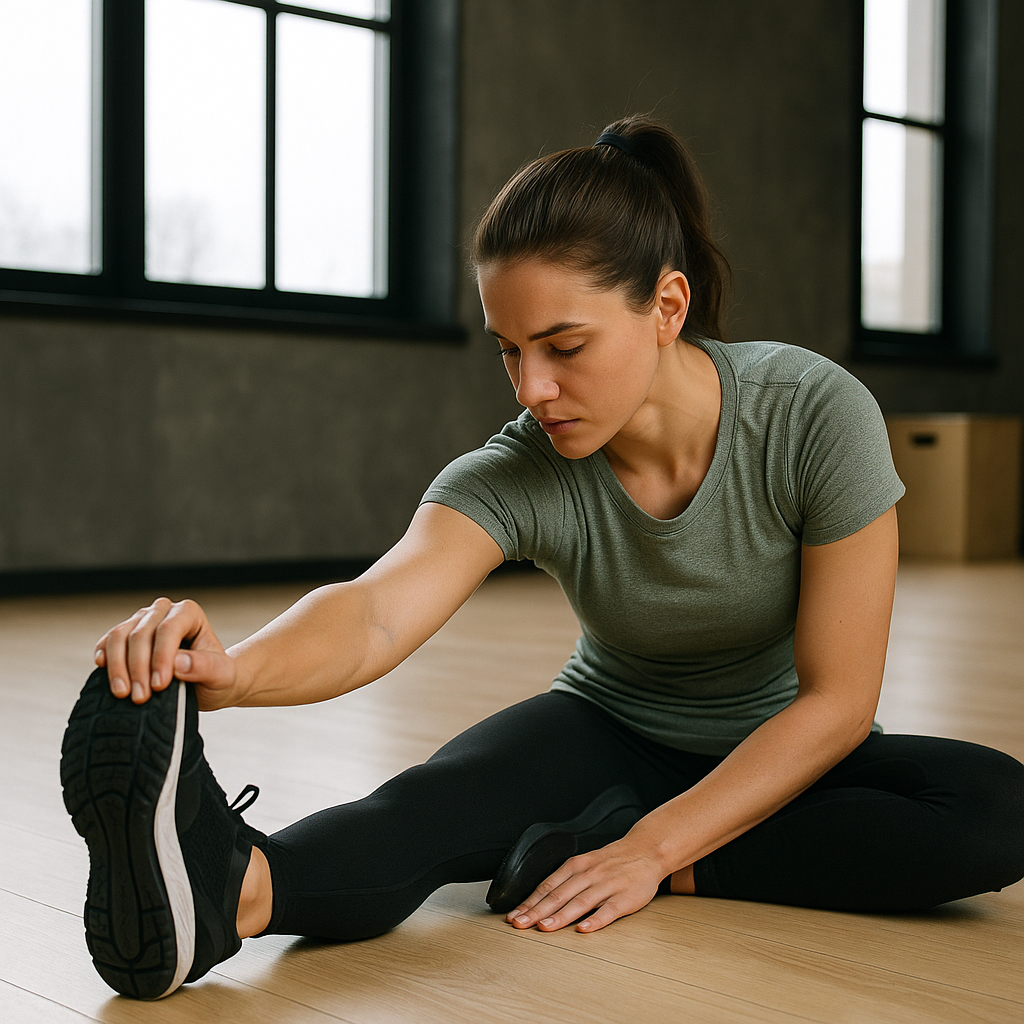
Introduction to the Article
The consensus statement by Warneke et al. (2025), published in the Journal of Sport and Health Science, provides evidence-based recommendations on stretching exercises for healthy populations. Developed through a structured Delphi process with 20 international experts in stretching research and applied sport science, it addresses the gap between widespread stretching practices and the current scientific evidence.
The aims were to:
- Establish uniform definitions for static, dynamic, and proprioceptive neuromuscular facilitation (PNF) stretching.
- Provide practical, evidence-based guidelines for eight application areas: acute and chronic effects on range of motion (ROM), strength, hypertrophy, stiffness, injury risk, post-exercise recovery, muscular imbalance andposture, and vascular health.
- Identify evidence gaps to guide future research.
Summary of Key Aspects
Study Design and Expert Panel
A panel of 20 experts from 12 countries was selected based on authorship of at least five peer-reviewed studies on stretching applications. The Delphi process used blinded voting rounds until ≥80% agreement was reached for each statement. Systematic reviews served as the evidence base for all topics, and “additional remarks” documented differing opinions and contextual factors.
Stretching Definitions
- Static stretching: elongates soft tissue beyond slack length by holding a joint position where passive resistance, stretch sensation, or discomfort are experienced. It can be performed assisted, if the muscle is lengthened by an external force without voluntary muscle activation (e.g., stretch band or a partner), or unassisted (self-stretching).
- Dynamic stretching: is the cyclic application of unloaded motion elongating the soft tissue (no external resistance). Stretch sensation or tissue resistance are reached without a static phase. As a variation, ballistic stretching differs from other dynamic by using faster, less controlled bounce-like actions performed to or near end range of motion. Cyclic, unloaded motion elongating soft tissue without a static phase; ballistic variation involves faster, less-controlled bounce-like actions.
- PNF stretching: PNF stretching combines static stretching and submaximal to-maximal muscle contractions. In contract-relax (CR) stretching, the target muscle is contracted isometrically and subsequently stretched in a relaxed non-contracted state. In antagonist-contract (AC) stretching, the target muscle is stretched with simultaneous antagonist contraction. In contract-relax-antagonist-contract (CRAC) stretching, the target muscle is contracted and then stretched uncontracted with simultaneous antagonist contraction.
Consensus Recommendations by Application Area
Range of Motion (ROM)
- Acute: Minimum 2 bouts of 5–30 s of any stretching type improve ROM; effects are similar to foam rolling, cycling, jogging, eccentric resistance training, heat, or vibration.
- Chronic: Static or PNF stretching preferred for the largest gains; 2–3 sets daily, 30–120 s per muscle/soft tissue to reach the highest weekly volume. Full-ROM resistance training or foam rolling can also be effective.
Strength
- Acute: Avoid prolonged static stretching (>60 s per muscle) before maximal or explosive efforts in isolated muscle groups; shorter static or dynamic stretching does not impair performance.
- Chronic: Not recommended as a primary strategy. High-dosage static stretching (≥15 min per muscle, ≥5 days/week for ≥6 weeks) may produce small gains when resistance training is not possible.
Muscle Hypertrophy
- Not recommended as a primary method. High-dosage static stretching (>15 min per muscle daily for ≥6 weeks) can yield small increases when other modes are not feasible.
Stiffness
- Acute: Static stretching >4 min per muscle can reduce passive muscle–tendon stiffness; shorter durations and other types show inconsistent effects.
- Chronic: Intensive static stretching ≥4 min per muscle, 5 days/week for ≥3 weeks can reduce muscle stiffness; tendon stiffness generally unaffected. Whether reducing stiffness is beneficial depends on the context and specific goals, as it may hinder performance in activities relying on the stretch–shortening cycle.
Injury Risk
- No general injury-prevention effect. Static stretching may reduce muscle injury incidence but could increase bone/joint injury risk.
Post-Exercise Recovery
- No evidence of benefit for reducing delayed onset muscle soreness (DOMS) or accelerating recovery compared to rest; its use can be left to individual preference.
Posture
- Stretching alone does not promote postural changes; combined programmes including strengthening are more effective.
Vascular Health
- Acute: One bout of ≥7 min static stretching per muscle can produce short-term cardiovascular benefits.
- Chronic: 15 min per muscle, 5 days/week for ≥4 weeks may reduce arterial stiffness and improve heart rate variability and endothelial function; evidence is still limited.
Conclusions and Practical Application
This consensus unifies definitions and recommendations for stretching in healthy populations. Stretching is effective for acute and chronic ROM gains and for reducing muscle stiffness, though similar benefits can be achieved through alternative methods such as resistance training or foam rolling. It may also have acute and chronic vascular benefits, but the supporting evidence is not yet strong.
The panel stresses that reducing stiffness is not automatically advantageous. While it can improve ROM or reduce discomfort linked to excessive rigidity, it may impair elastic energy storage and release in the muscle–tendon unit, potentially limiting explosive performance. Coaches should carefully weigh these trade-offs when targeting stiffness reduction.
Stretching is not recommended as a primary method for strength or hypertrophy development, general injury prevention, post-exercise recovery, or postural correction. High-volume static stretching can be useful in situations where other forms of training are not possible, such as during rehabilitation or in certain clinical conditions.
For practitioners, the key is to apply stretching with a clear purpose, selecting the type, duration, and frequency according to the specific performance or health goal, and being aware of both potential benefits and drawbacks.
Warneke K, Thomas E, Blazevich AJ, Afonso J, Behm DG, Marchetti PH, Trajano GS, Nakamura M, Ayala F, Longo S, Babault N, Freitas SR, Costa PB, Konrad A, Nordez A, Nelson A, Zech A, Kay AD, Donti O, Wilke J. Practical recommendations on stretching exercise: A Delphi consensus statement of international research experts. J Sport Health Sci. 2025 Jun 11;14:101067. doi: 10.1016/j.jshs.2025.101067. Epub ahead of print. PMID: 40513717; PMCID: PMC12305623.