


Blog
Being a scientist without a laboratory

Following the previous article about how sports science has become more integrated into daily training, I wanted to continue with something that is more uncomfortable to write, because it does not have a clean answer and because I have been on both sides of it during these years.
The first thing I have seen, and I have seen it in every environment I have worked in, is that coaches usually move faster than the science. Many of the things that today are supported by the literature were already being done on court years before anyone published them, not because those coaches had evidence in their hands but because they were observing their athletes, trying something, adjusting it, repeating it and keeping what seemed to work, and the research arrived later to explain the mechanism behind it. That does not mean that everything done on court has the same value, because trying things without any criteria is not the same as trying things with a reason, and the fact that practice moves faster is not an argument to justify anything we feel like doing. But it does mean that waiting for the science before we move is not a neutral decision either, it is also a decision, and it has a cost for the athlete we have in front of us today.
At the same time, and this is the other side of the same problem, there are many professionals who only feel comfortable doing something when it is written in a paper. The difficulty is that most of the time that paper was produced in conditions that are very different from the reality of the sport: another population, another competitive level, a controlled environment, a session isolated from a calendar where our athletes travel almost every week and compete more than they train. So reading the paper is not the end of the process, it is the beginning of it, because after reading it we still have to understand our own context, our athletes, the moment of the season, the resources we have and the people we work with. The evidence is the base, but the court is the judge. Content is king, but context is god.
And there is a third thing that we usually follow without asking, which is the tradition of our own sport. I do not want this to sound like a criticism of anyone, because there is a lot of accumulated knowledge in the way each sport has been trained for decades, and throwing that away because it is old would be another form of arrogance. The question I ask myself is a different one: when we do something because it has always been done like this, do we still know what it is for? Someone could tell me that this contradicts what I wrote above, because if I accept that coaches move faster than the science, I am also accepting practices that do not have evidence behind them yet. For a long time I felt that it was not a contradiction but I could not explain why, and today I would put it like this: what makes a decision defensible is not where it comes from, whether it is a paper, a tradition or something we saw somebody else doing, it is whether we can explain what it is based on, what we expect from it, and what would make us change it. A tradition we can justify, that has a reason we understand and that we are still willing to review, is a perfectly valid tool. A tradition whose only answer is that it has always been done like this leaves us in the same place as buying a device because everybody has one, or as applying a protocol because it appeared in a journal, with the difference that this one is much harder to notice, because it is already part of the culture of the place where we work.
So the two extremes end up in the same place: the one who only moves when a paper says so, and the one who does not move because this is how it has always been done have both stopped answering the same question.
What I try to defend is something in between, and it is not a comfortable middle point: being a scientist inside the practice. You do not need a laboratory or a research group for that. When I see something that interests me, the first thing I want to understand is the mechanism, what exactly it is supposed to improve, which part of it is scientifically supported and which part is not, which contraindications it has, and which aspects I need to consider before putting it into the daily training. Only then do I try it with my athletes, and then I look at whether it works in this environment, with these players and this calendar, or whether it does not work and needs to be adjusted, reduced, moved to another moment of the session, or left out. Being a scientist is not following something without questioning it. It is looking for answers, and not for the answer we would like to find, which is a different thing and much harder to do honestly when the idea is ours.
Testing follows the same logic for me. Instead of testing all the time and collecting information because we can, what has worked better in my experience is to observe first and test after, so that when I see something in a player, in their movement, in how they respond to the sessions or in how they recover, I test that specific thing in order to turn what I am seeing into more objective information. The observation of the coach is not the enemy of the data, it is usually what tells us where to look, and the test is what allows us to confirm it, to discard it, or to follow it over time.
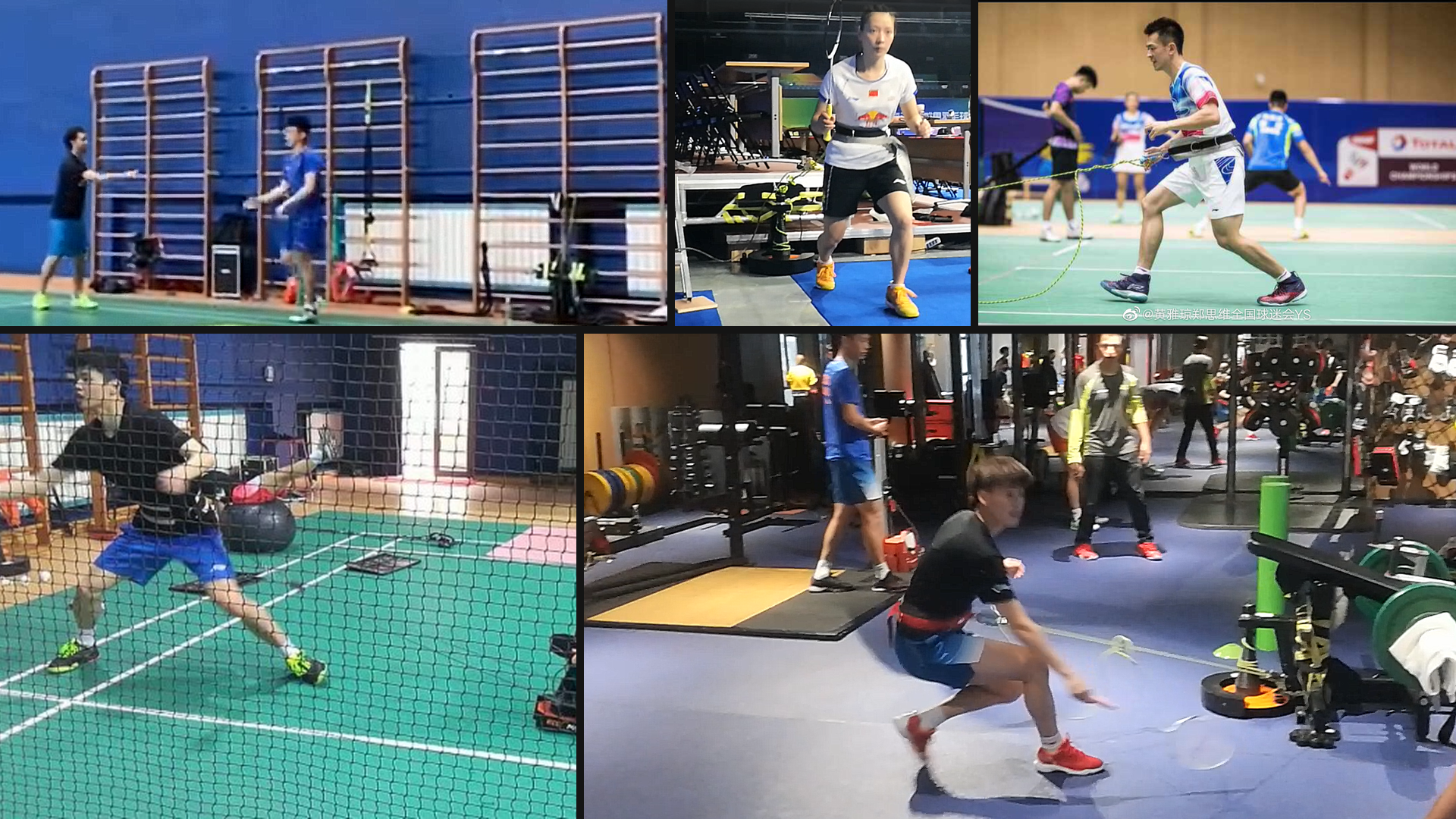
There are two things that have travelled with me for many years and that explain quite well how I work. The first one is flywheel training. I brought that technology with me when I started with the national team, and we built our own gym in order to be able to work like that, because I believe in what it offers, which does not mean that everything has to be done with it. At that moment there was very little applied research available and almost all of it came from football, so it is a good example of what I said at the beginning: the practice was already there and the literature arrived later. Today the evidence is much wider, and it has also become more precise in a way that I find useful for our daily work. The consensus statement led by Beato and signed by nineteen experts, published in Sports Medicine in 2024, recommends calling this method flywheel resistance training rather than eccentric overload, because not every exercise, every user and every load actually produces that overload, and it points out that the outputs depend on the effort of the athlete, on the familiarisation with the device, on the inertia selected and on the machine itself. The article by Spudić and Nosaka, published in Sports Medicine Open in 2026, goes in the same direction, explaining that the mechanical load of the eccentric phase is limited by the concentric phase that comes before it. There is also research in badminton now, which did not exist when I started, and the point for me is not that flywheel came out ahead of everything else, because that is not what those studies show either. The point is that we know considerably more today about when to use it, how to use it and what the outputs actually depend on, and that is what changes a session. I did not bring this technology because it was a trend, I brought it because I had been using it for years in an environment where it was common, and that time is what allowed me to understand its limits, which for me is the real condition to integrate anything: not the novelty of the tool, but understanding it well enough to know when not to use it.
The second one, and the one that has shaped more of my work, is integrative training. It comes from the environment where I was formed, close to the football training philosophy that was being developed in Barcelona at that time, and it has stayed with me in every sport and every country I have worked in since. The starting point is simple, although the consequences are not: no capacity is ever trained in isolation. When a player is on court, the technical, the tactical, the physical and the psychological part are being trained at the same time whether we planned it or not, and what we can decide is where we put the emphasis, designing the task so that it pushes more in one direction or another according to the objective of that session or that week, but never pretending that we are training one thing alone. The same drill, with a different rest, a different space, a different number of decisions or a different score, becomes a different training, and that is where the real design work happens. Something similar to the flywheel has happened here as well. When I started working this way it was a training philosophy I had learned, not something I could point to in the literature, and today there is a whole body of work in sport science that describes athletes and teams as complex systems and that gives a much clearer language to what we were already doing. I would be careful about saying that this proves the approach, because a framework that explains something well is not the same as a study comparing two ways of training, but it does mean that the decision is better supported today than it was when I made it.
This is also how we build the academy. The work on court is adjusted according to what we want to develop in that period, and the physical, technical, tactical and psychological objectives are decided together instead of each area bringing its own plan to the same player. It takes more time, it creates more discussion, and it is much less comfortable than working each of us in our own space, but the athlete does not live in our areas, they live in one single process, and if we do not connect them they are the ones who have to do it alone.
And here is where I see one of the biggest problems today, which is not a problem of knowledge but of structure. In many teams and clubs the different areas work in isolation: the player goes to the gym, then goes to the court, and the two things belong to different people who rarely design anything together. The fitness coach often does not see what the player is doing on court and receives the data afterwards, and the data, as useful as it is, does not always reflect what really happened in that session. This is something I have said several times and I keep thinking it is true: a conversation with the athlete about how they are feeling can give me more information than all the numbers I have on the screen, and the best decisions I have been part of came from putting the two things together, the information and the conversation, and not from choosing one of them.
The way I understand all of this is close to the image of a toolbox. Along your career you keep some tools, you take others out because you have learned that they were not doing what you thought, and you add new ones, and what really matters is not how many you carry but whether you understand the ones you have, whether you know what each of them is for and in which situation it is not the right choice. But there is a second part that took me longer to understand, which is that the tools are not independent from each other. A flywheel exercise is not a separate block that lives on its own, it sits inside everything else the player is doing that week, and the moment you change one thing you are changing the whole system, the fatigue, the time available, what the player brings on court the next day. So the question is not only whether you understand each tool, it is how they fit together, and that is the same idea as the integrative approach, only looked at from the other end. That is what ends up building your own way of training, and it is also the reason why I do not think anyone should copy what we do, because our tools were chosen inside our context.
So the question I keep coming back to is not whether we should trust the science or trust the court, because I do not think that choice exists, but how we can be more rigorous in the way we try things while the evidence is still being built. In my case, what has helped is quite simple, and it is not perfect, but it gives me something to hold on to: understanding the mechanism and the contraindications of what I want to introduce before introducing it, being honest about which part of the decision is supported by evidence and which part is my own bet based on experience, deciding beforehand what I would need to see in order to keep it or to leave it, using the tests to objectify what I am already observing instead of collecting data in every direction, designing the sessions together with the other areas instead of sharing the athlete between us, talking with the athlete about what the data cannot tell me, and keeping the willingness to change when what I see does not confirm what I believed.
Not following the tendency, and not rejecting it either, but asking why it is there, what problem it is trying to solve, and whether that is a problem we actually have in our context.